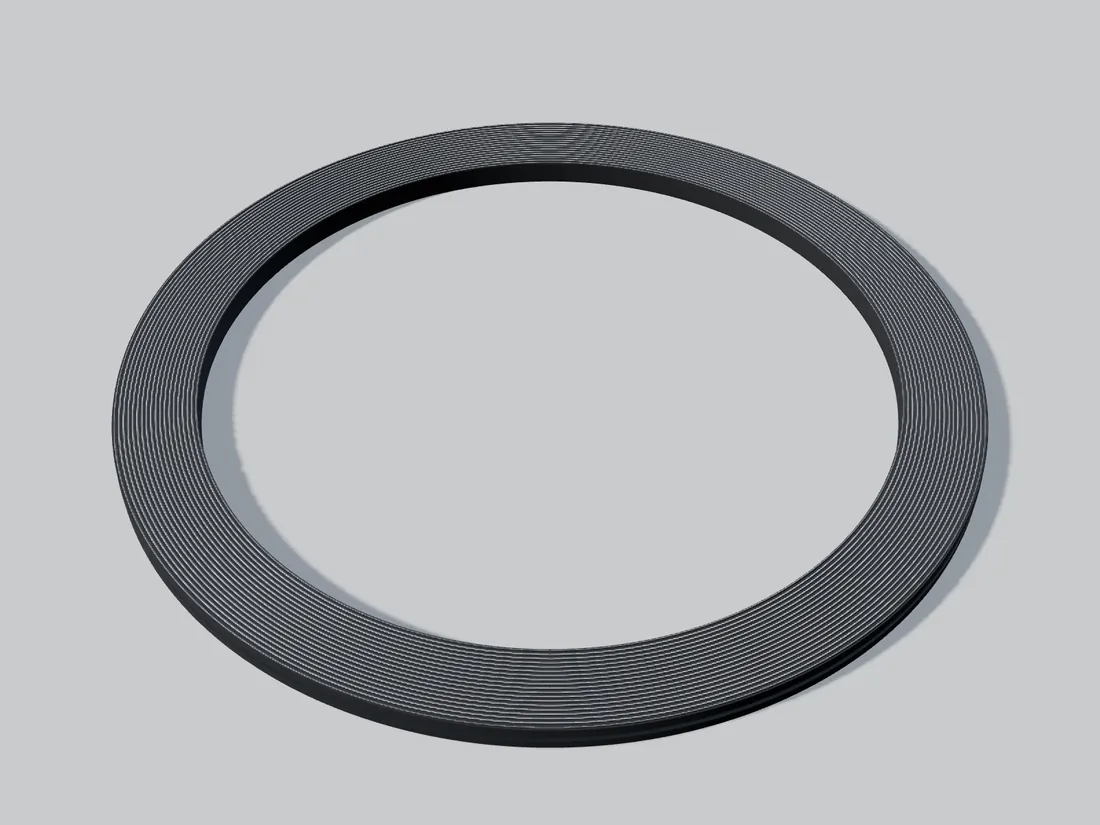
Style R
Sealing element only
For tongue-and-groove and male-female flanges, where the groove locates and limits the gasket.
Products / Spiral wound
Metal strip and soft filler wound into a spring. As the flange heats, cools and relaxes, the windings recover and keep the seal tight. Made to ASME B16.20 and EN 1514-2, or to your drawing.
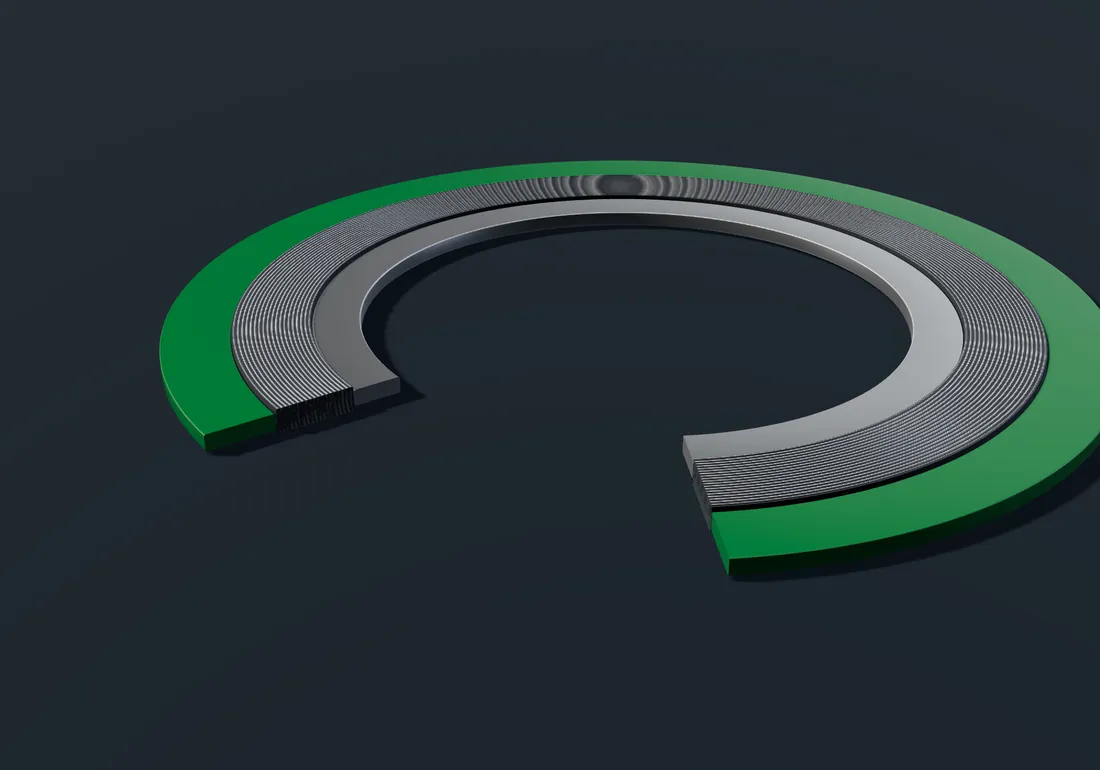
The flange face decides the style. Rings are added where the joint needs centring, a compression stop or bore protection.
Sealing element only
For tongue-and-groove and male-female flanges, where the groove locates and limits the gasket.
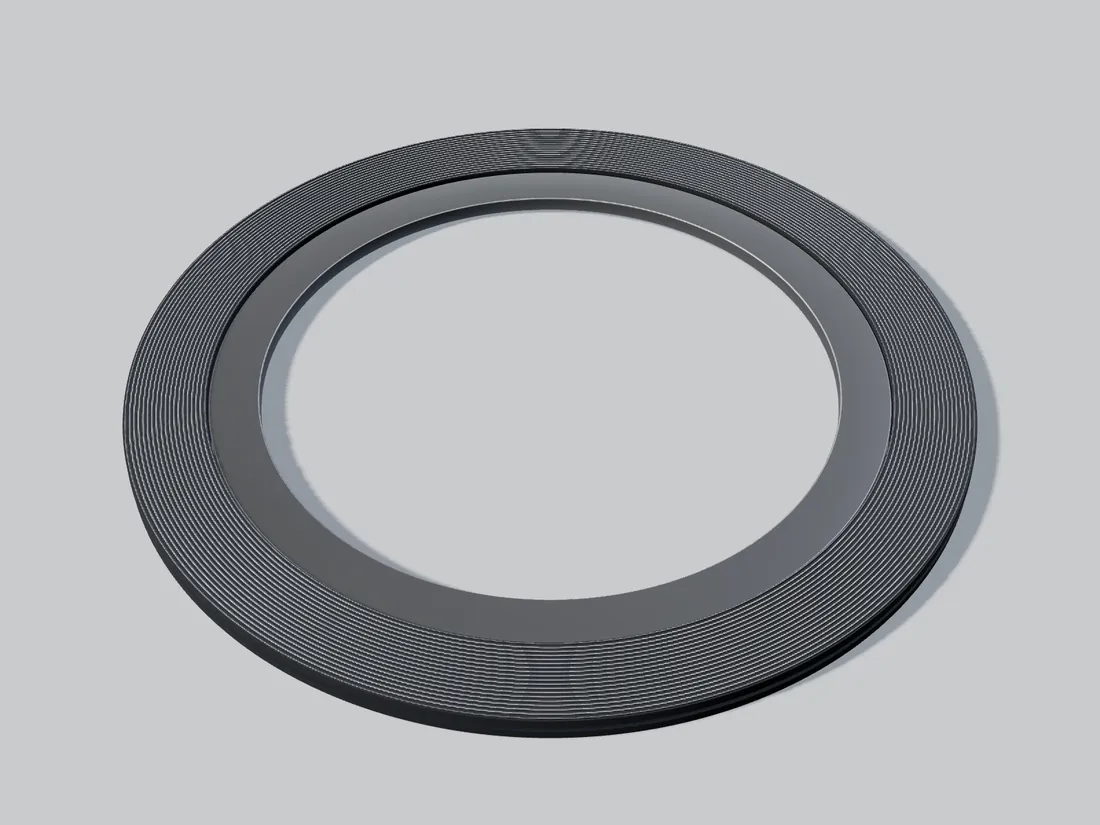
With inner ring
For male-female and recessed faces where the bore needs protecting from turbulence and buckling.
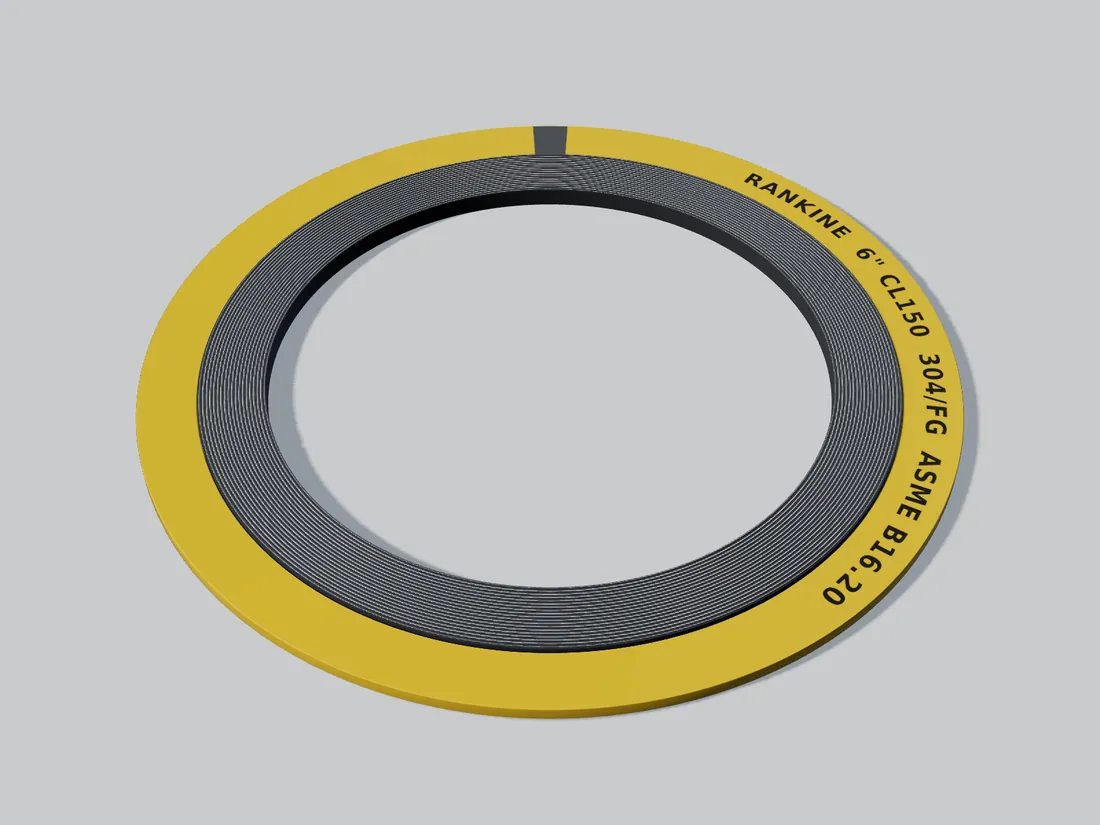
With outer centring ring
Outer ring only. Used on raised faces where the purchaser specification allows no inner ring, typically low-pressure utility service.
Outer and inner rings
ASME B16.20 calls for an inner ring with PTFE and flexible graphite fillers unless the purchaser specifies otherwise. Our standard for raised faces.
Also made
Heat exchanger: with welded pass partition bars.
Low stress: softer windings for Class 150 and weak flanges.
Special shapes: oval, obround and manway gaskets to drawing.
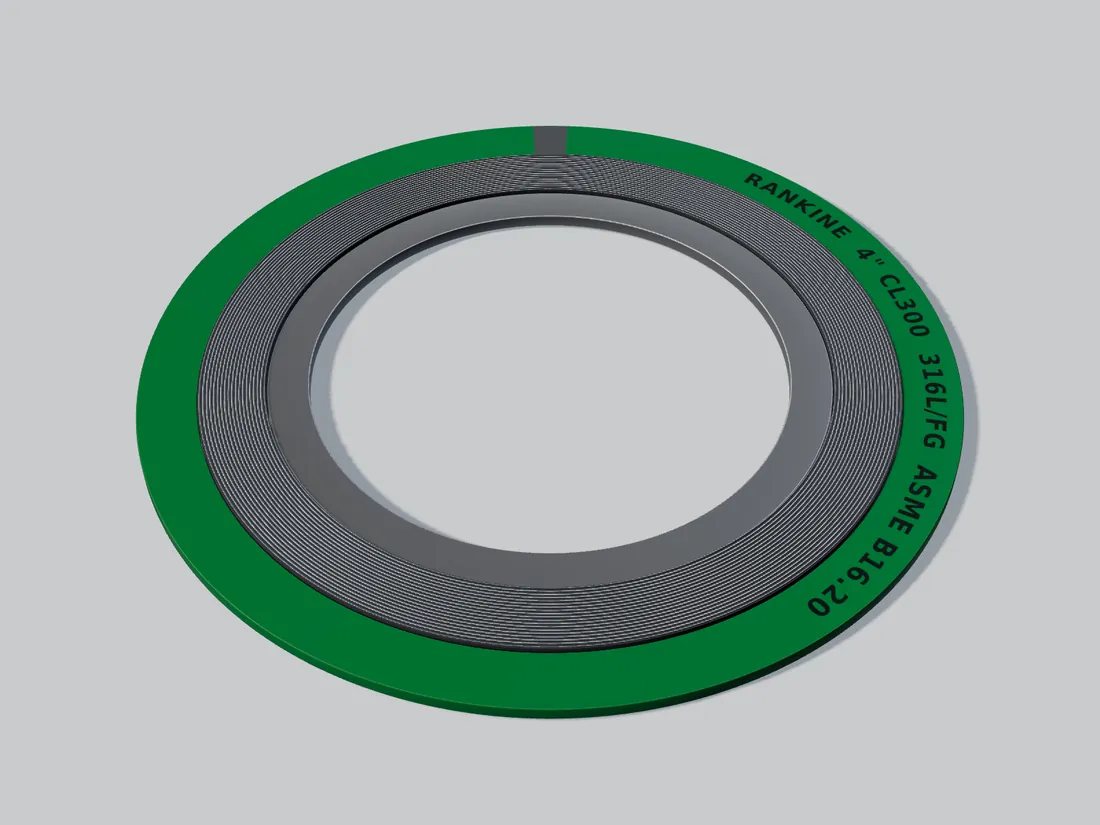
The filler does the sealing. Choose it for the highest temperature and the most aggressive media the joint will see.
The standard filler. Seals well at low stress and resists most chemicals. Limit 450 °C where air can reach it; higher in steam or inert gas.
−200 to 450 °C
Marked with a grey stripe on the outer ring
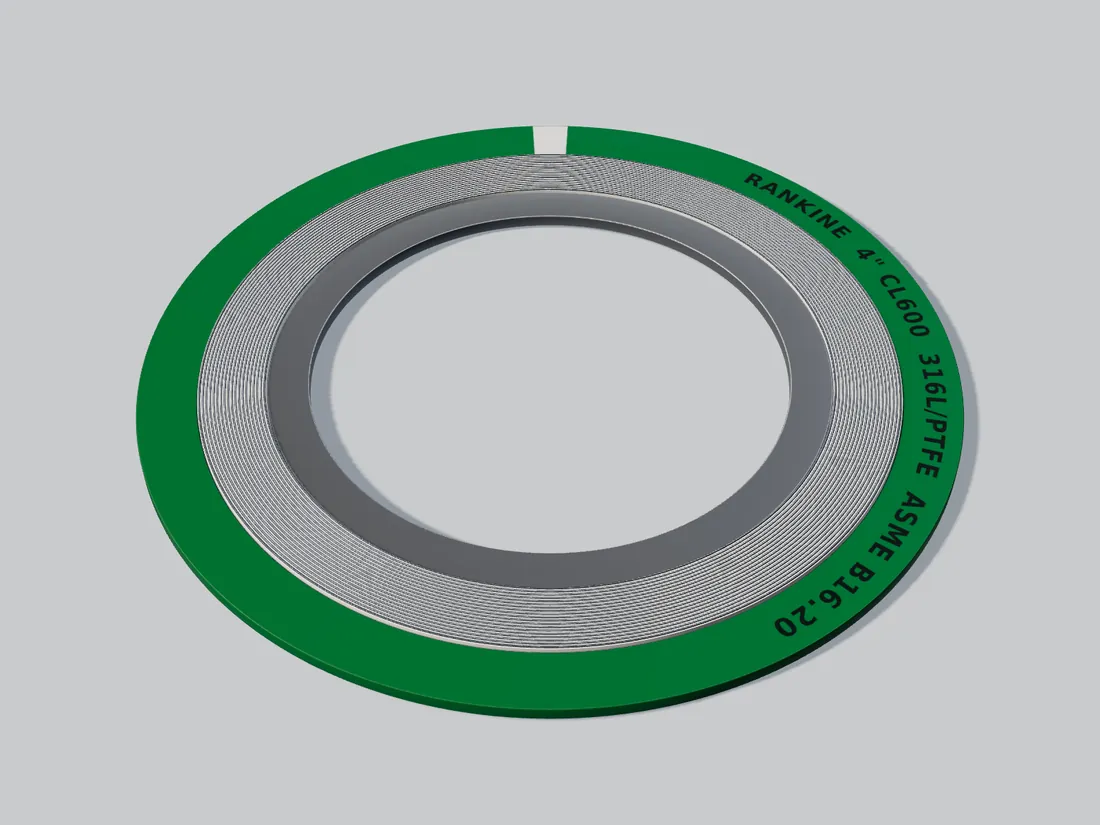
For strong chemicals and oxygen where graphite is not allowed. Always with an inner ring, as PTFE can cold flow.
−200 to 260 °C
Marked with a white stripe on the outer ring
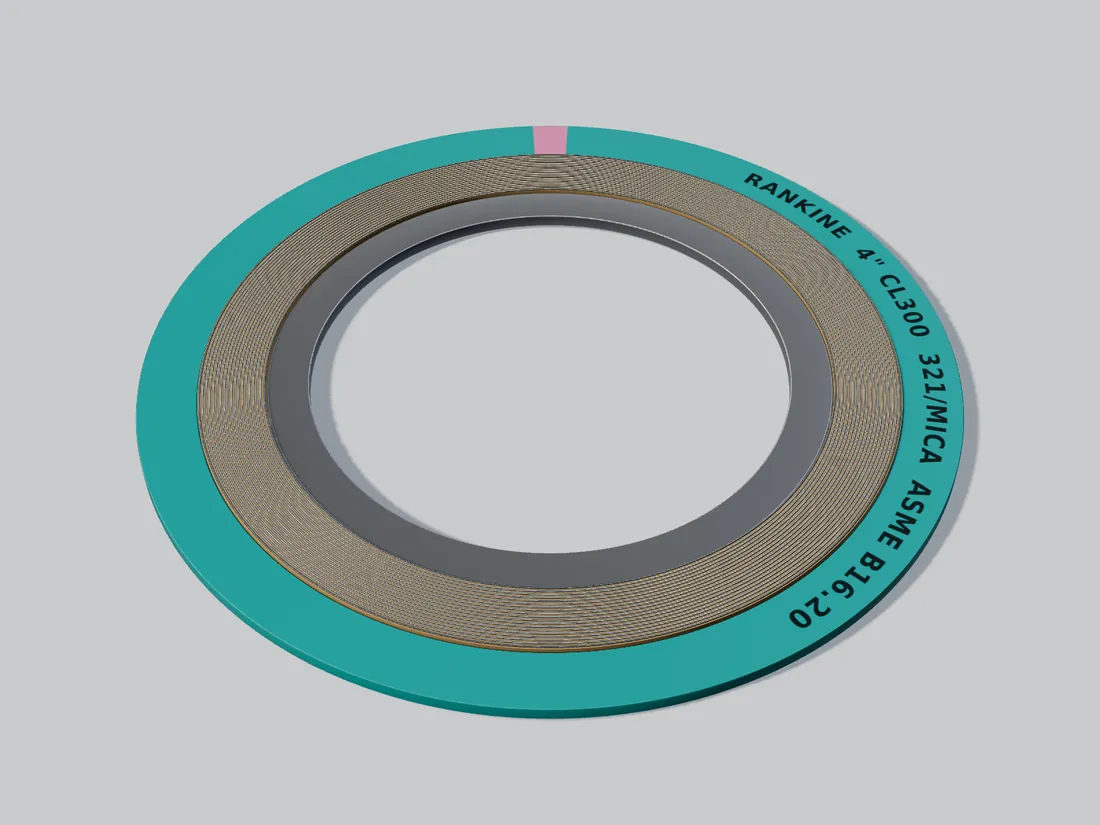
For high temperature and oxidising service beyond graphite, including exhaust and fire-safe joints.
−200 to 1000 °C
Marked with a pink stripe on the outer ring
ASME B16.20 colour-codes the outer ring by winding metal, with a stripe for the filler, so the right gasket can be picked from the store and checked in the flange.
| Ring | Winding metal | Colour | Temperature | Typical service |
|---|---|---|---|---|
| 304 stainless | Yellow | −195 to 760 °C | General process, water, steam, mild chemicals | |
| 316L stainless | Green | −100 to 760 °C | The default for refinery and chemical service | |
| 321 stainless | Turquoise | −195 to 760 °C | High temperature, resists sensitisation | |
| 347 stainless | Blue | −195 to 925 °C | High temperature with intergranular corrosion risk | |
| Monel 400 | Orange | −130 to 820 °C | Hydrofluoric acid, seawater, chlorides | |
| Nickel 200 | Red | −195 to 760 °C | Caustic soda and reducing media | |
| Inconel 600 | Gold | −100 to 1090 °C | High temperature oxidising service | |
| Inconel 625 | Gold | −100 to 1090 °C | Severe corrosion and high temperature | |
| Incoloy 825 | White | −100 to 870 °C | Sulphuric and phosphoric acids | |
| Hastelloy C276 | Beige | −185 to 1090 °C | Wet chlorine, strong acids, oxidisers | |
| Alloy 20 | Black | −185 to 760 °C | Sulphuric acid service | |
| Titanium grade 2 | Purple | −195 to 1090 °C | Chlorides and oxidising acids |
Limits are typical published values for gasket service and depend on media and duty. Our engineers confirm the limit for your application on every quotation.
Quote a spiral wound gasket
Request a quote