Spiral wound or Kammprofile: how to choose
Both gaskets are semi-metallic: a metal element for strength and recovery, and a soft material that does the sealing. They differ in how they carry bolt load.
A spiral wound gasket is a spring. Its V-shaped windings compress under load and recover as the flange relaxes, heats and cools. That makes it forgiving on standard process flanges, and it is the most economical semi-metallic gasket in standard sizes.
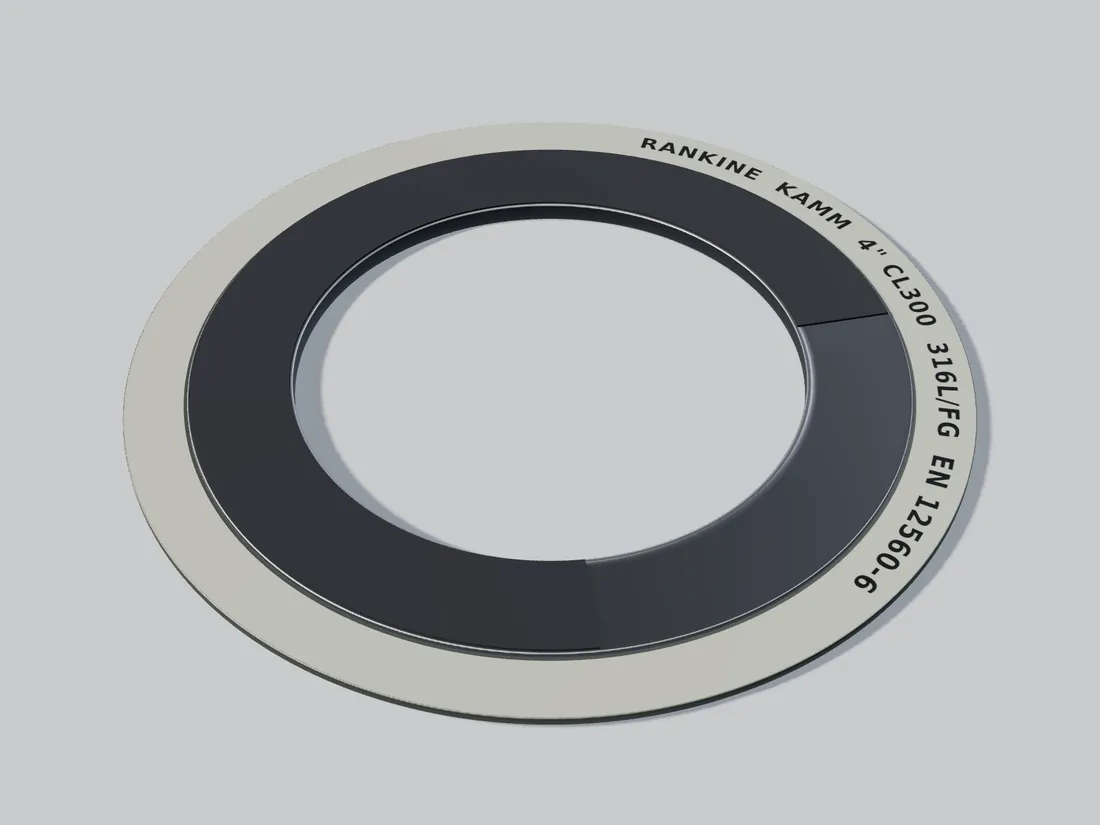
A Kammprofile gasket has a solid serrated core. The serrations concentrate bolt load into narrow rings of very high stress in the thin facing, so it seals at lower bolt load and does not crush or unwind. That suits heat exchangers, cycling service and flanges with small bolts.
As a rule of thumb: spiral wound for standard pipework, Kammprofile for exchangers, cycling and weak flanges. When the joint has a history of leaks, the Kammprofile is often the fix. The gasket selector applies these rules to your joint.
Reading ASME B16.20 colour codes
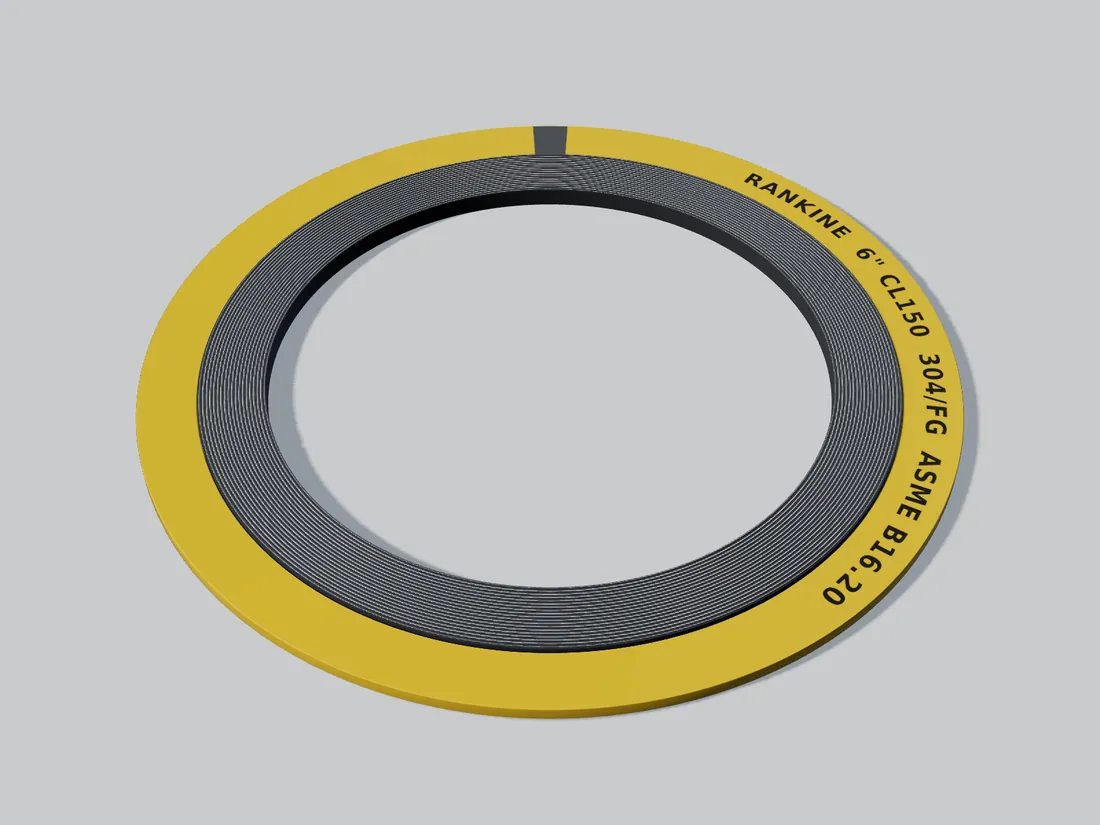
Every spiral wound gasket to ASME B16.20 carries two kinds of marking on its outer ring: paint colours and stamped text.
The ring colour shows the winding metal: yellow for 304, green for 316L, turquoise for 321, blue for 347, orange for Monel 400, gold for Inconel, beige for Hastelloy C276. A stripe on the ring shows the filler: grey for flexible graphite, white for PTFE, pink for mica.
The stamped text gives the manufacturer, size, class, metal and filler, and the standard. Together they let a storeman pick the right gasket and an inspector check it in the flange before it is closed.
A gasket with the wrong colour is the wrong gasket. Do not fit it.
Why inner rings are now standard on spiral wound gaskets
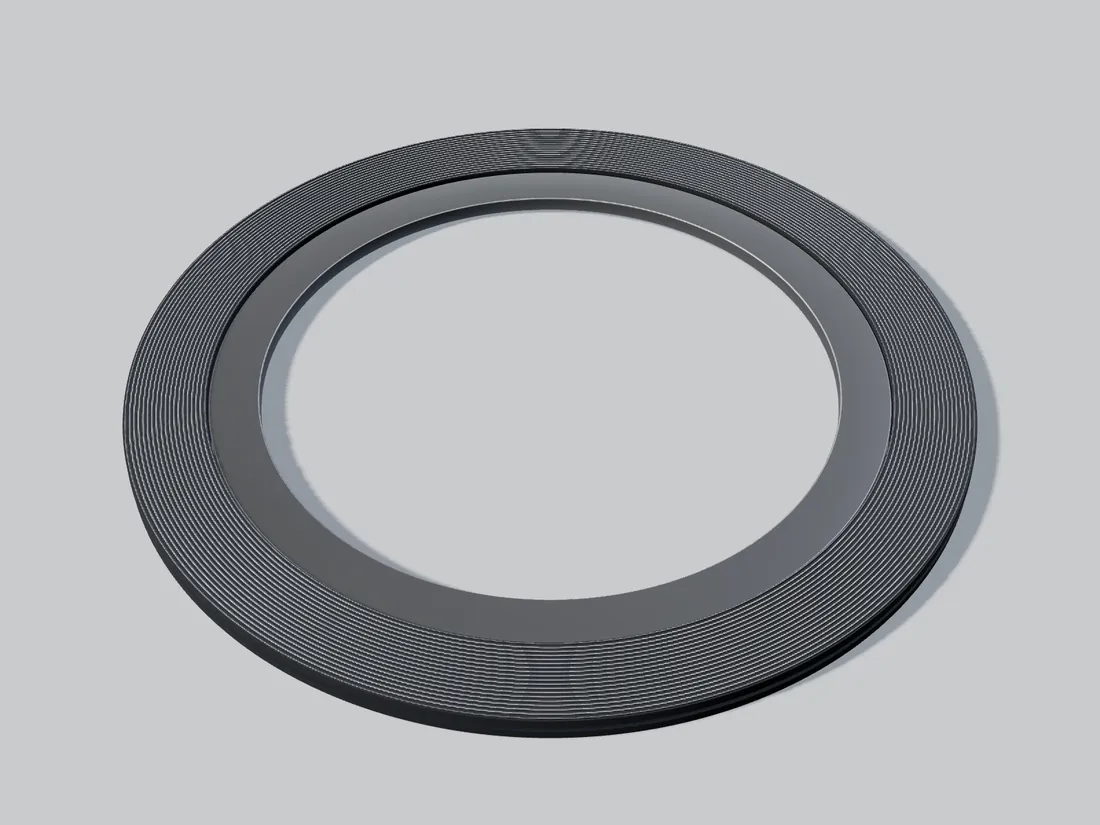
An inner ring sits inside the windings. It stops them buckling inward into the bore when the joint is tightened, limits turbulence and erosion at the gasket, and acts as a heat shield for the filler.
Inward buckling was behind many spiral wound failures, especially with soft fillers and in large sizes. ASME B16.20 now calls for an inner ring with PTFE and flexible graphite fillers unless the purchaser specifies otherwise.
The cost difference is small compared with a leak or a fire. We supply style CGI as standard for raised-face flanges.
Five common causes of gasket failure
Uneven bolt load. Tightening bolts one after another around the flange cocks it. Tighten in a cross pattern, in passes, to the same target.
Too little bolt load. A gasket needs a minimum stress to seal. Lubricate the bolts and use a calibrated tool so the torque becomes load.
Damaged flange faces. A radial scratch across the sealing face is a leak path no gasket can fill. Inspect the faces before fitting.
Re-used gaskets. Metallic and semi-metallic gaskets deform permanently. Always fit a new one.
Wrong material. Graphite oxidises above about 450 °C in air; PTFE softens above 260 °C. Match the filler to the temperature and media.